
A Grandmother's Letter to the Editor and Campaign
This blog begins with material based on a letter to the editor by me, grandmother Peg Coleman. The letter was published in the Syracuse Post Standard (12 May 2026) in response to an Associated Press article by Laura Ungar and Jonel Aleccia (3 May 2026) and was reprinted in the Wise Traditions journal (summer 2026).
I am concerned that articles about raw milk like that by Ungar and Aleccia printed in the Syracuse NY newspaper replay a common pro-pasteurization narrative and fail to provide scientifically accurate information or context that my neighbors in upstate NY and beyond deserve to know when making dietary and health decisions.
If you are wondering why millions of longtime raw milk consumers like me, my kids and grandkids, scientists, farmers and farm workers ignore warnings about imminent danger and choose raw milk hygienically produced for direct human consumption over pasteurized milk, read on.
The assumption or belief that raw milk is ‘inherently dangerous’ is common in pro-pasteurization narratives. This assumption implies that all raw milk is dangerous and always will be, no matter how it is produced and monitored. Reality in the 21st century is that contaminated milk, both pasteurized and raw, can be dangerous. A recent systematic review reported that for the period 2007-2020, pasteurized dairy was associated with significantly higher outbreaks, hospitalizations, and deaths compared to raw dairy, as well as 20 cases of stillbirth, miscarriage, or premature delivery, none reported in raw milk in this period (Sebastianski et al., 2022). Further, pasteurizing milk did not prevent 4,313 acute illnesses, 343 hospitalizations, and 26 deaths for dairy-borne infectious disease based on CDC data for 2005-2020.
Consider current epidemiologic and microbiologic evidence and hygienic practices documented herein that do not support the assumption of inherent danger for raw milk (Berge and Baars, 2020; Coleman et al., 2023; Stephenson et al., 2024, 2026). In addition, major scientific advances of the past decade point to strong evidence of the loss of raw milk benefits after pasteurization, related to loss of naturally present heat-sensitive bioactive components (including microbes) and allergenicity of heat-damaged milk components (Abbring et al., 2019; Dietet et al., 2022). Multitudes of diverse microbes in breastmilk and cow milk (the milk microbiota) promote gut health, balance immune function, and protect infants, children, and adults from infectious and inflammatory disease.
If you want to learn more, continue reading. Three longtime collaborators reunited this year to develop a case study on benefits and risks of pasteurizing raw donor breastmilk and raw cow milk. The case study is undergoing open, transparent, and independent panel peer-review at the end of the month. People from all perspectives, including pro-raw, pro-pasteurization and all those inbetween, will have the opportunity to register at the appended button and listen-in for the independent panel peer-review organized by the Alliance for Risk Assessment (ARA).
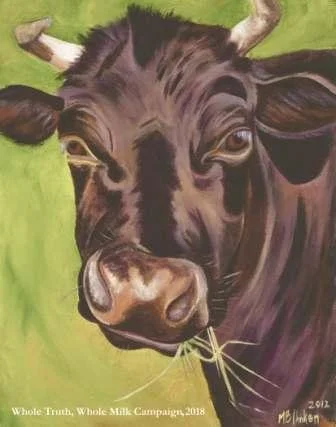
The panel peer-review of our case study is funded by contributions to the Whole Truth, Whole Milk Campaign. Meet ‘Veri’ the campaign cow on the right whose name is the root of TRUTH in 8 languages.
Veri was campaign cow in 2018 when Upstate NY Society for Risk Analysis (SRA) hosted the campaign to compile evidence on benefits and risks of pasteurizing donor breastmilk and cow milk. The products of the 2018 campaign (Coleman et al., 2021; Dietet et al., 2022) form the basis for the 2026 case study.
The 2026 Campaign hosted through Coleman Scientific Consulting is poised to open deliberation of the evidence and counter the flood of misinformation about raw milk in the media and scientific journals. Colleagues introduced below will present the case study to the independent panel convened by ARA to focus on current evidence and misinformation important for the public as well as technical audiences.
Pro-pasteurization narratives rarely address the breadth of evidence listed below on benefits and risks of pasteurizing milk, with documentation listed below from a rebuttal of misinformation and from my letter to the editor. The wisdom of SRA’s commitment to ‘let the data speak’ is sorely needed in broader public discourse to bridge the chasm of mistrust in our society about food freedom and access to local raw milk.
The article listed below on the American Council for Science and Health website provides a concise, readable, and referenced description that challenges outdated assumptions and misleading narratives consistent with pro-pasteurization worldviews:
The organization not only posted this rebuttal to misinformation from a previous post on their site, but then posted an apology for missing the mark on evidence-based communication.
My letter to the editor included the 8 highlights below, revealing a divergent view of benefits and risks of pasteurizing raw donor breastmilk and raw cow's milk largely based on a recent analysis of CDC data spanning 16 years (2005-2020; Stephenson et al., 2024) and previous collaborative studies that challenge the pro-pasteurization narrative.
1. Raw milk outbreaks, illnesses, hospitalizations, and deaths are not increasing, contributing less than 1% of the burden of infectious disease in the US over 16 years: 0.4% outbreaks, 0.1% illnesses, 0.5% hospitalizations).
2. Annual rates of raw milk illness per serving for available data from CA were low and not increasing (<1 illness per million servings for 14 of 16 years, and <5 illnesses per million servings for 2015 and 2023).
3. As previously stated, pasteurizing milk did not prevent 4,313 acute illnesses, 343 hospitalizations, and 26 deaths for dairy-borne infectious disease over 16 years.
4. Pasteurized not raw milk contributed to an estimated 15 million chronic illnesses (intolerance or allergy), with 15 fatalities reported in the National Food Death Allergy Registry for 2005-2025. Eleven of the 15 milk allergy deaths disproportionately affected children aged 3-17.
5. Children with milk allergy all tolerated the maximum volume of raw milk (50 mL) but suffered allergy symptoms at an average of 8.6 mL pasteurized milk in a small provocation study (Abbring et al., 2019).
6. Pasteurized dairy was associated with significantly higher outbreaks, hospitalizations, and deaths compared to raw dairy, as well as 20 cases of stillbirth, miscarriage, or premature delivery, none reported in raw milk (Sebastianski et al. 2022).
7. Raw milk feeding of infants, compared to heated milks, provided the highest level of protection against respiratory and ear infections in a large prospective cohort study (983 infants), comparable to breastfeeding. Diarrhea was not associated with raw milk feeding to infants (Loss et al., 2015; see post Epidemiologic Associations for Protection of Infants: 2015 Clinical Study), comparable to breastfeeding.
8. Pasteurizing human donor breastmilk unequivocally causes a loss of benefits to NICU infants. Denial of evidence on benefits from dozens of human studies for breast milk and bovine milk reveals bias. Follow the money.
What else do my NY neighbors and those in other states need to know? Most states have excellent records of raw milk safety based on CDC data. NY state reported only 4 illnesses (no hospitalizations, no deaths) associated with raw milk in the past 10 years, while numbers of licenses for dairy farms selling raw milk direct-to-consumers increased. CDC data on milkborne deaths (4 for pasteurized and 1 confirmed for raw milk) over 16 years are too sparse for reliable prediction of future milkborne mortality (Stephenson et al., 2024, 2026). Many articles cite opinions claiming that increasing access will increase outbreaks or deaths. The CDC data refute those opinions.
I work to protect the rights of my grandkids and their grandkids to choose fresh unprocessed local milk, complete with the natural protective milk microbiota and other bioactives. Advances in understandings of the protective effects of the milk microbiota call for more balanced, evidence-based dialogue about actual studies, not just opinions or positions of individuals and organizations who promote agendas that threaten farm families and rob consumers of our freedom to choose our 21st-century diets. The independent panel peer-review convened by ARA will provide opportunities for open public discourse about the evidence.
Want to learn more?
Learn more about the 2026 Whole Truth, Whole Milk Campaign here and watch the short video below..
Three collaborators reunited to prepare a case study for the first ARA panel peer-review on benefits and risks associated with pasteurizing raw donor breastmilk and raw cow milk:
Cornell Emeritus Professor of Immunology, author, and educator Rodney Dietert,
decision scientist and Past-President of SRA D. Warner North, who accepted the SRA Distinguished Achievement Award last year for his extraordinary contributions and leadership in risk analysis, and
medical microbiologist and SRA Fellow Peg Coleman.
REGISTER at the button below and LISTEN-IN to the virtual ARA panel peer-review of this case study on Monday, 26 October 2026, 10:30 am to 12:30 pm, Eastern Daylight Savings Time (EDST; UT-4).
Access to the panel peer-review is free and open to the public. Register and participate to get your questions and comments in the public record. Click on the title below for free access to the case study.